Back to integrations
Currents and GitHub integration
Save yourself the work of writing custom integrations for Currents and GitHub and use n8n instead. Build adaptable and scalable workflows that work with your technology stack. All within a building experience you will love.




How to connect Currents and GitHub
Create a new workflow and add the first step
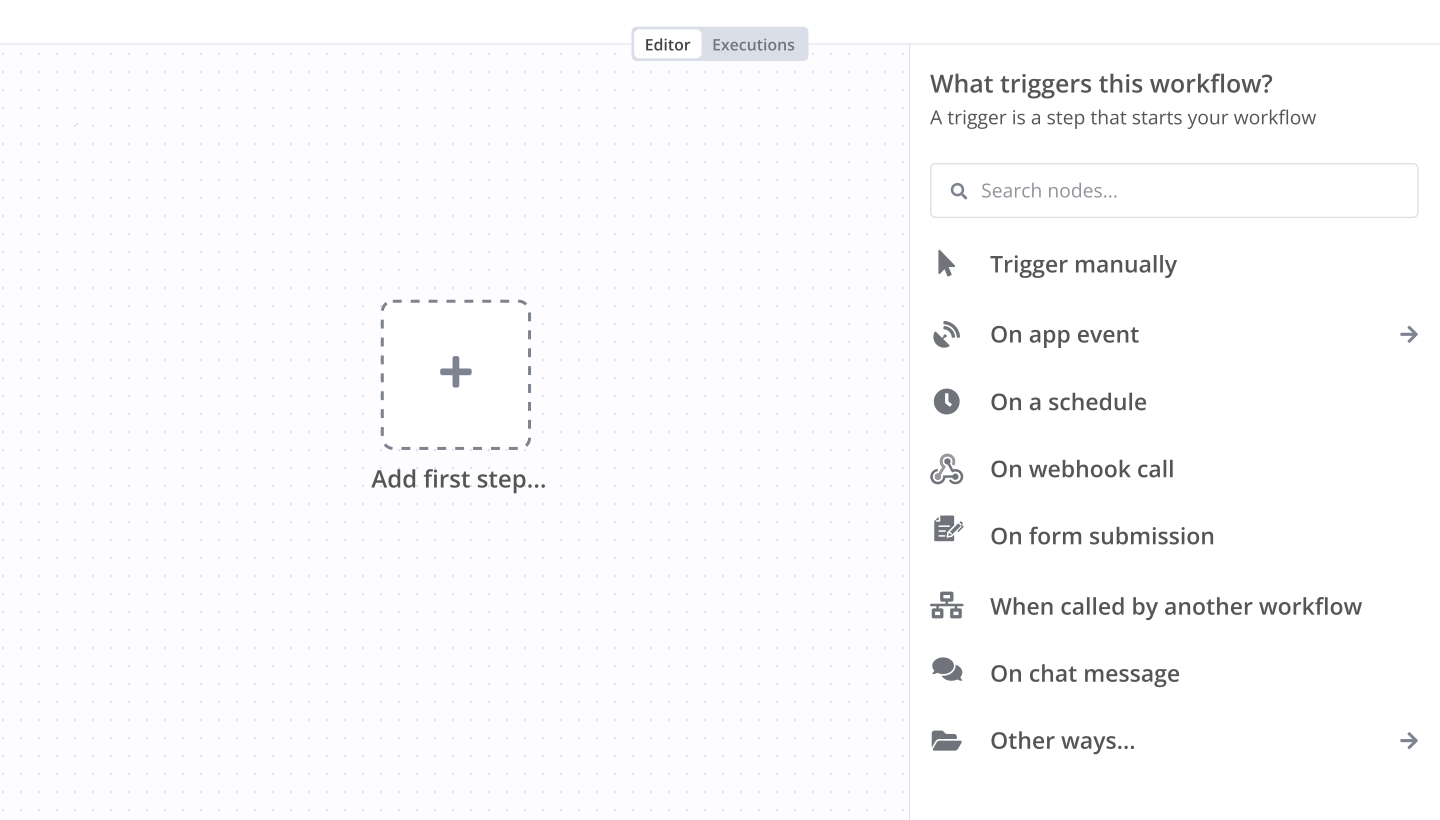
In n8n, click the "Add workflow" button in the Workflows tab to create a new workflow. Add the starting point – a trigger on when your workflow should run: an app event, a schedule, a webhook call, another workflow, an AI chat, or a manual trigger. Sometimes, the HTTP Request node might already serve as your starting point.
Build your own Currents and GitHub integration
Create custom Currents and GitHub workflows by choosing triggers and actions. Nodes come with global operations and settings, as well as app-specific parameters that can be configured. You can also use the HTTP Request node to query data from any app or service with a REST API.
Currents supported actions
Create
Create a new action for a project
Delete
Archive an action (soft delete)
Disable
Deactivate an active action
Enable
Reactivate a disabled action
Get
Get a single action by ID
Get Many
Get many actions for a project
Update
Update an existing action
Get
Get a spec file execution instance with full test results
Get
Get a project by ID
Get Many
Get many projects
Get Insights
Get project insights and metrics
Cancel
Cancel a run in progress
Cancel by GitHub CI
Cancel a run by GitHub Actions workflow run ID
Delete
Delete a run and all associated data
Find
Find a run by project and filters
Get
Get a run by ID
Get Many
Get many runs for a project
Reset
Reset failed specs for re-execution on specified machines
Generate
Generate a unique test signature
Get Many
Get aggregated spec file metrics for a project
Get Many
Get aggregated test metrics for a project
Get Many
Get historical test execution results for a specific test signature
GitHub supported actions
Create
Create a new file in repository
Delete
Delete a file in repository
Edit
Edit a file in repository
Get
Get the data of a single file
List
List contents of a folder
Create
Create a new issue
Create Comment
Create a new comment on an issue
Edit
Edit an issue
Get
Get the data of a single issue
Lock
Lock an issue
Get Repositories
Returns all repositories of an organization
Create
Creates a new release
Delete
Delete a release
Get
Get a release
Get Many
Get many repository releases
Update
Update a release
Get
Get the data of a single repository
Get Issues
Returns issues of a repository
Get License
Returns the contents of the repository's license file, if one is detected
Get Profile
Get the community profile of a repository with metrics, health score, description, license, etc
Get Pull Requests
Returns pull requests of a repository
List Popular Paths
Get the top 10 popular content paths over the last 14 days
List Referrers
Get the top 10 referrering domains over the last 14 days
Create
Creates a new review
Get
Get a review for a pull request
Get Many
Get many reviews for a pull request
Update
Update a review
Get Repositories
Returns the repositories of a user
Get Issues
Returns the issues assigned to the user
Invite
Invites a user to an organization
Disable
Disable a workflow
Dispatch
Dispatch a workflow event
Dispatch and Wait for Completion
Dispatch a workflow event and wait for a webhook to be called before proceeding
Enable
Enable a workflow
Get
Get a workflow
Get Usage
Get the usage of a workflow
List
List workflows
Currents and GitHub integration details
Other integrations with GitHub




Currents and GitHub integration tutorials
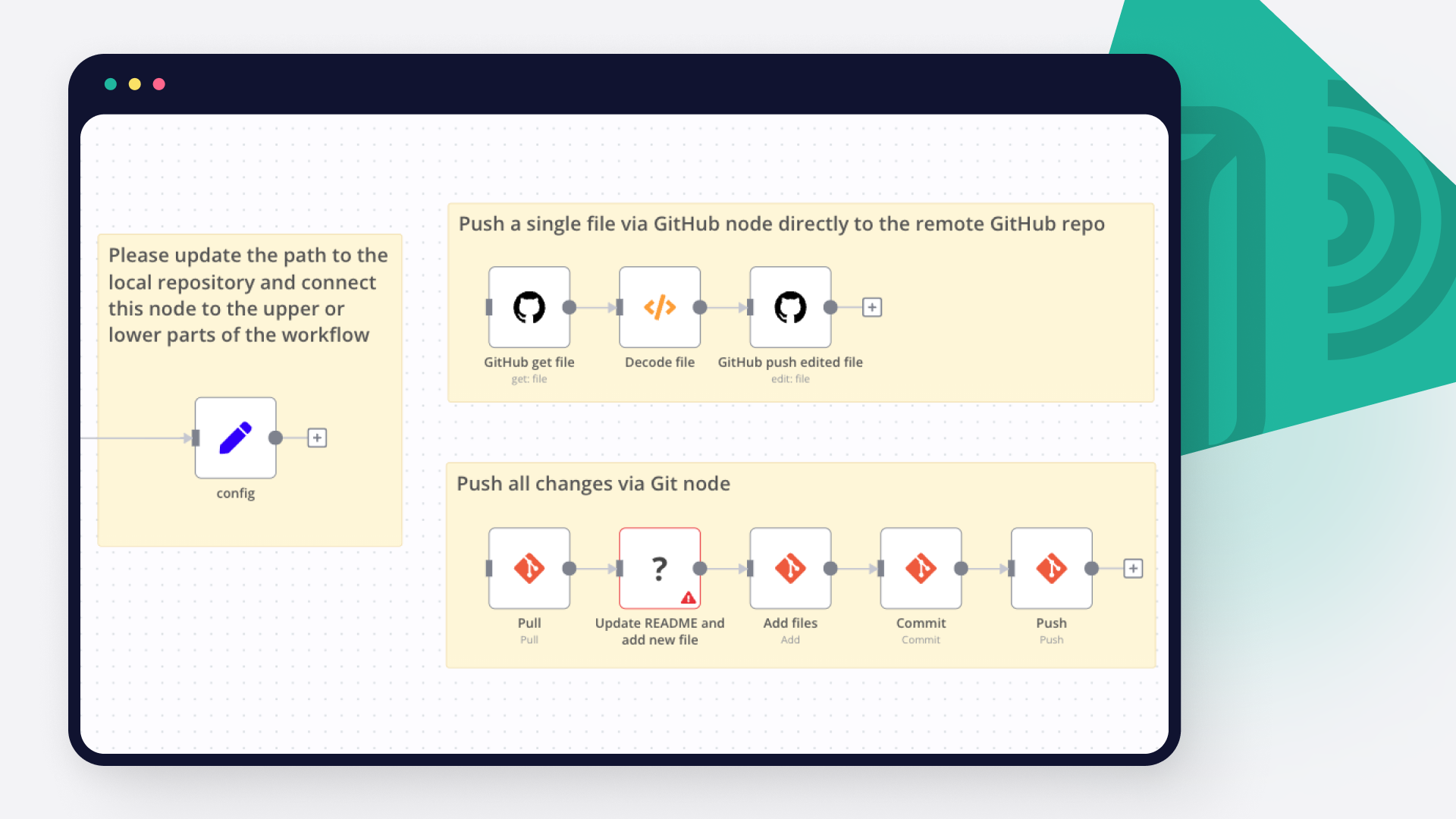
How to push code to GitHub: 3 techniques
Learn how to seamlessly push code into GitHub with these 3 techniques: GitHub command line; GitHub n8n node for remote repositories, n8n Git node for local repos. And grab free n8n workflows for a quick start with GitHub automations!
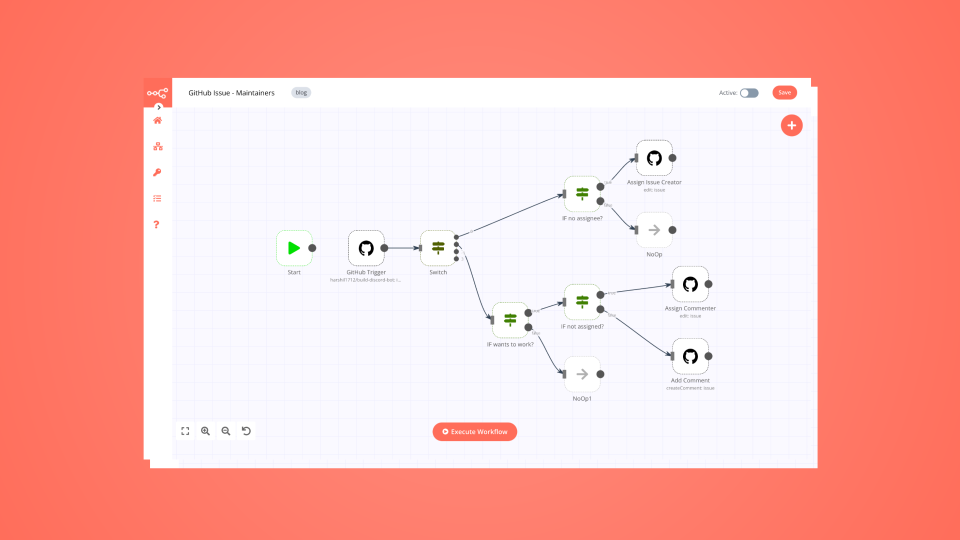
How to automatically manage contributions to open-source projects
Maintainers, this one’s for you: simplify your work by building a no-code workflow that assigns GitHub issues to contributors.
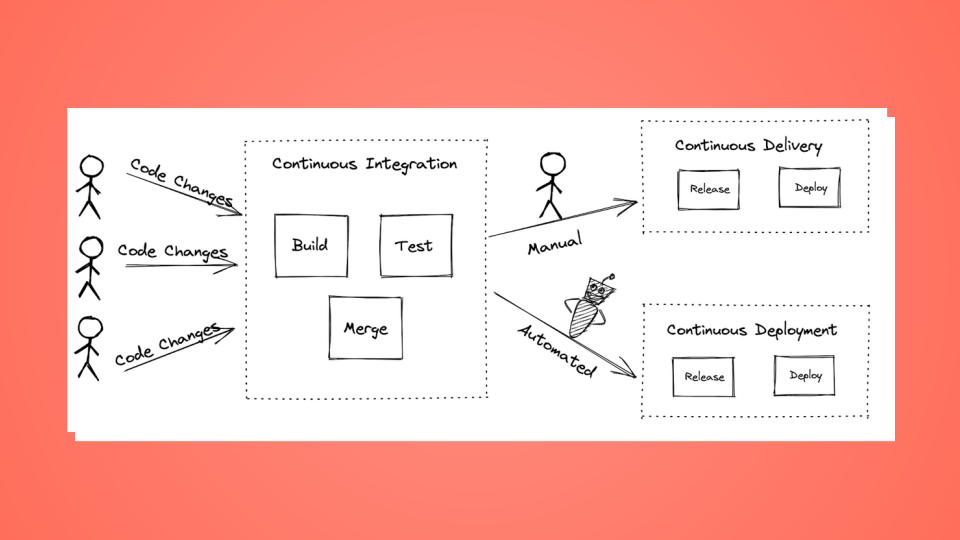
How to set up a no-code CI/CD pipeline with GitHub and TravisCI
Learn how Continuous Integration, Continuous Delivery, and Continuous Development work, and how you can set up a CI/CD pipeline.
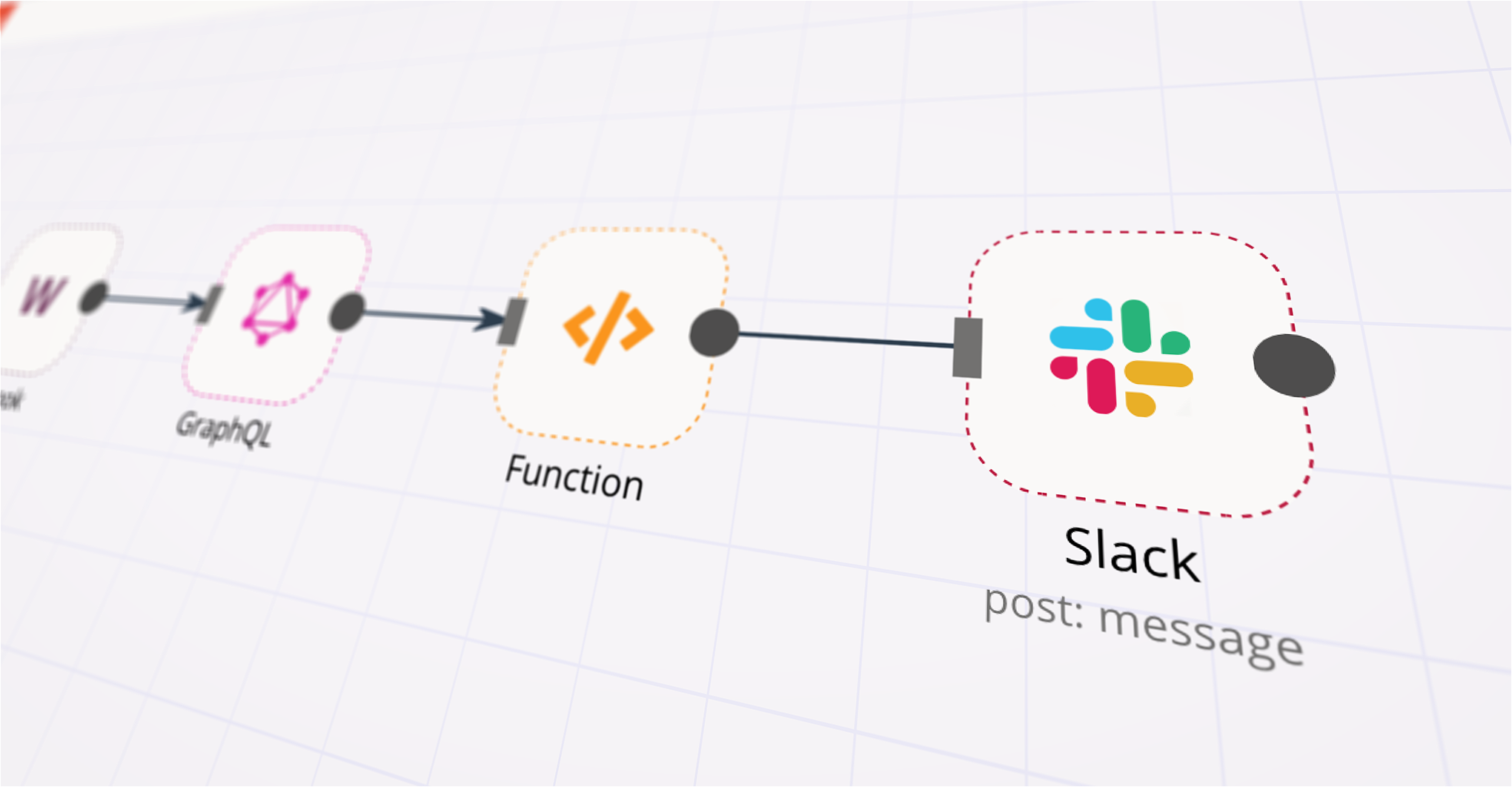
How to automatically give kudos to GitHub contributors
Create a workflow that sends Slack notifications about GitHub contributors to celebrate their valuable contributions.
FAQs
FAQ
Can Currents connect with GitHub?
Can I use Currents’s API with n8n?
Can I use GitHub’s API with n8n?
Is n8n secure for integrating Currents and GitHub?
How to get started with Currents and GitHub integration in n8n.io?
The world's most popular workflow automation platform for technical teams including





Why use n8n to integrate Currents with GitHub
Build complex workflows, really fast